 RuleExpert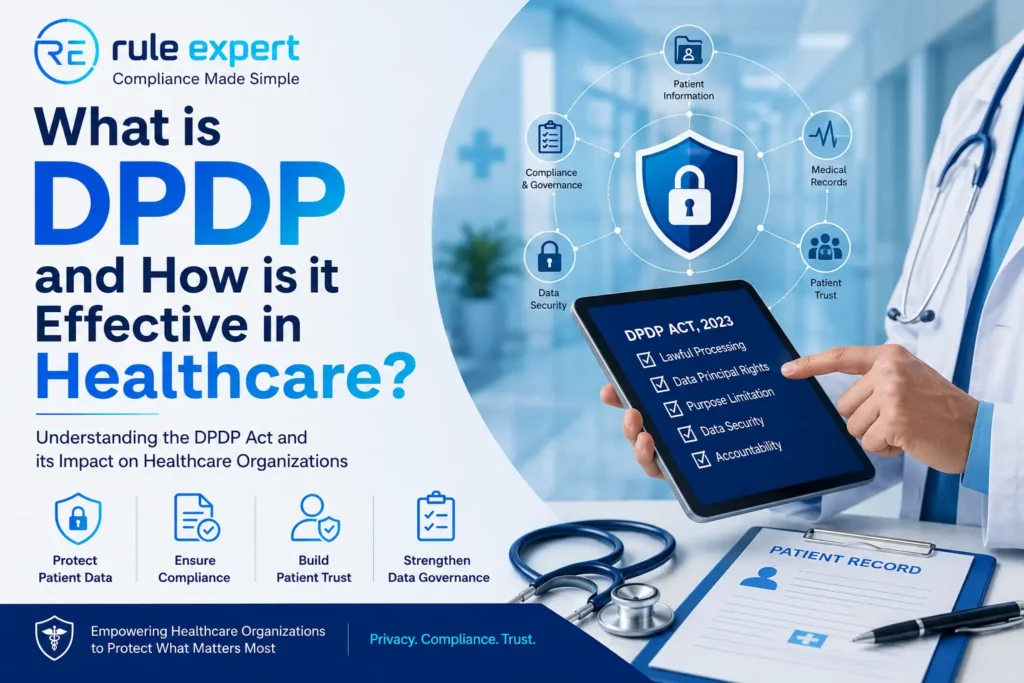
Healthcare organizations manage some of the most sensitive personal information, including medical histories, diagnostic reports, insurance details, prescriptions, biometric information, and patient contact details. As hospitals and healthcare providers increasingly adopt Electronic Health Records (EHRs), telemedicine, mobile health applications, and cloud-based Hospital Information Systems (HIS), protecting personal data has become an essential part of responsible healthcare delivery.
The Digital Personal Data Protection (DPDP) Act, 2023 establishes a legal framework governing the processing of digital personal data, including its collection, use, storage, sharing, and deletion where applicable. For healthcare organizations, it provides a structured approach to privacy governance while helping strengthen patient trust and accountability in handling personal information.
Understanding the DPDP Act
The Digital Personal Data Protection (DPDP) Act, 2023 provides the legal framework for processing digital personal data in India. It defines the responsibilities of organizations handling personal data while recognizing the rights of individuals whose data is processed.
The Act aims to:
- Protect digital personal data.
- Establish responsibilities for organizations processing personal data.
- Provide Data Principals with specific rights regarding their personal data.
- Encourage responsible data governance and accountability.
- Support a trusted digital ecosystem.
For hospitals, diagnostic laboratories, clinics, health-tech companies, pharmacies, and insurance providers, the Act highlights the importance of implementing structured privacy and governance practices throughout the data lifecycle.
Why is DPDP Important for Healthcare?
Healthcare organizations process large volumes of personal data every day. Unlike many industries, patient information is continuously created, updated, shared, and accessed across multiple systems and stakeholders during diagnosis, treatment, billing, insurance processing, and follow-up care.
Patient data may include:
- Medical records
- Laboratory reports
- Diagnostic images
- Prescription history
- Insurance information
- Identity documents
- Contact information
- Appointment records
- Billing information
- Emergency contact details
This information may flow across:
- Hospital Information Systems (HIS)
- Electronic Health Record (EHR) platforms
- Laboratory Information Systems (LIS)
- Radiology systems
- Pharmacy software
- Insurance portals
- Telemedicine platforms
- Cloud applications
- Third-party healthcare service providers
As digital ecosystems become more interconnected, maintaining visibility over where personal data resides and how it is processed becomes increasingly important.
1. Patient Consent Management
Many healthcare interactions involve obtaining patient consent, such as admissions, surgeries, diagnostics, teleconsultations, and participation in research.
However, managing consent effectively can become challenging when records are distributed across multiple departments or systems.
Common operational challenges include:
- Paper-based consent forms
- Multiple versions of the same consent
- Difficulty retrieving historical consent records
- Tracking consent updates or withdrawals
- Managing digital consent across different systems
It’s important to note that not every healthcare processing activity relies solely on consent. Depending on the circumstances, the DPDP Act also recognizes certain legitimate uses where processing may be permitted without obtaining fresh consent. Healthcare organizations should understand which legal basis applies to each processing activity.
3. Responding to Data Principal Requests
Under the DPDP Act, individuals (Data Principals) are provided with certain rights regarding their personal data, including the ability to seek information about how their data is processed and request correction or erasure where applicable.
For healthcare organizations, responding efficiently requires:
- Identifying where patient data resides
- Coordinating across multiple departments
- Verifying requests
- Maintaining appropriate documentation
- Tracking response timelines
Organizations with structured workflows are generally better positioned to respond consistently and efficiently.
4. Third-Party Data Processing
Healthcare organizations frequently work with third-party service providers, including:
- Diagnostic laboratories
- Insurance companies
- Cloud infrastructure providers
- Health-tech platforms
- Payment gateways
- Software vendors
While certain processing activities may be performed by external partners, healthcare organizations should maintain appropriate governance and oversight over third-party data processing through contracts, monitoring, and risk management practices.
5. Managing Data Breaches
Not every data breach involves sophisticated cyberattacks.
Healthcare organizations may encounter incidents such as:
- Emails sent to unintended recipients
- Unauthorized internal access
- Lost laptops or storage devices
- Incorrect sharing of diagnostic reports
- Errors by third-party service providers
A structured breach management process helps organizations investigate incidents, coordinate internal teams, document actions taken, maintain evidence, and demonstrate responsible governance during audits or regulatory reviews.
Benefits of DPDP Readiness in Healthcare
Implementing sound privacy and governance practices offers benefits beyond regulatory compliance.
Improved Patient Trust
Patients are more likely to trust healthcare providers that demonstrate responsible handling of personal information.
Better Data Governance
Healthcare organizations gain improved visibility into:
- Where patient data is stored
- Who has access
- How data is processed
- Which third parties process personal information
Operational Efficiency
Structured processes help streamline activities such as:
- Consent management
- Handling Data Principal requests
- Incident response
- Vendor oversight
- Compliance documentation
Improved Compliance Readiness
Well-documented policies, procedures, and governance practices enable organizations to respond more effectively during internal assessments, audits, or regulatory reviews.
Stronger Organizational Governance
Clearly defined responsibilities and standardized workflows reduce operational risks while supporting consistent data handling practices across departments.
Building DPDP Readiness in Healthcare
Healthcare organizations can strengthen their privacy governance by focusing on the following areas:
✔ Understand what personal data is collected
Maintain an up-to-date inventory of personal data and related processing activities across systems.
✔ Establish structured consent processes
Where consent is the appropriate legal basis, maintain accurate, searchable, and well-governed consent records.
✔ Standardize operational workflows
Develop documented procedures for handling Data Principal requests, incident management, approvals, and internal coordination.
✔ Govern third-party processing
Review vendor relationships regularly and establish appropriate oversight for organizations processing patient information.
✔ Strengthen documentation
Maintain policies, procedures, records, assessments, and evidence that support responsible governance practices.
How RuleExpert Helps Healthcare Organizations
Managing privacy governance manually becomes increasingly difficult as healthcare organizations grow and patient data expands across multiple systems.
RuleExpert provides an AI-powered compliance automation platform that helps healthcare organizations streamline privacy operations through:
- DPDP Readiness Assessments
- Consent Management
- Data Registry
- Data Principal Request (DSR) Automation
- Vendor Governance
- Breach Management
- Compliance Monitoring
- Governance Documentation
By centralizing compliance workflows, organizations can improve visibility into personal data processing, strengthen governance, reduce manual effort, and support audit and regulatory preparedness.
Conclusion
The DPDP Act represents an important step toward strengthening personal data protection across India’s healthcare ecosystem.
For healthcare organizations, compliance should not be viewed as a one-time exercise but as an ongoing commitment to responsible data governance.
By adopting structured privacy practices, improving operational visibility, and implementing consistent governance processes, hospitals and healthcare providers can strengthen patient trust, improve organizational resilience, and build sustainable compliance practices aligned with the DPDP framework.